


Robert Charles Venturi Jr. was born on June 25, 1925 in Philadelphia. After attending the Episcopal Academy in Pennsylvania for high school, Venturi went on to further his education at the prominent Princeton University. He graduated from Princeton in 1947 summa cum laude and then went on to complete an M.F.A. in 1950. After educating himself in the United States, he was awarded the Rome Prize Fellowship at the American Academy in Rome. Early in his career, he worked for Eero Saarinen and then Oscar Stonorov. Venturi became a teacher’s assistant for Louis Kann at the University of Pennsylvania—where he went on to become an instructor and eventually, an associate professor. While at the University of Pennsylvania, Robert met Denise Brown Scott, a fellow faculty member as well as an architect and planner, who would later become his wife. After settling down together, Robert and Denise had one son. Venturi went on to teach at Yale School of Architecture. He then became a visiting lecturer at Harvard University’s Graduate School of Design.
Robert Venturi’s firm [for architecture] is called Venturi, Scott Brown & Associates (VSBA). His firm has created many buildings throughout the years. In 1962, they created The Vanna Venturi House, a building that can be found in Chestnut Hill, Philadelphia, Pennsylvania. The Trubek House in Nantucket Island, Massachusetts, the Brant House in Greenwich, Connecticut, and the Allen Art Museum Addition in Oberlin, Ohio were also works of the firm Venturi, Scott Brown & Associates. However, their work was not done, because the firm went on to design the House in Tuckers Town, Bermuda, Gordon Wu Hall in Princeton, New Jersey, and a bank building in Celebration, Florida.
Robert Venturi is not only a professor and architect, but he is also an accomplished author. One of his most famous works includes “Complexity and Contradiction in Architecture,” where Venturi challenged modernism and praised the mix of historic styles of design in cities such as Rome. In his second book titled “Learning from Las Vegas” (subtitled “The Forgotten Symbolism of Architectural Form), Venturi explores the Vegas Strip. This novel was written with the help of Steven Izenour and Denise Scott Brown; within this postmodernist classic, the three authors state that the Vegas Strip is an emblem for new architecture.
Throughout his lifetime, Venturi has received a few prestigious awards in the design arena. In 1985, he was awarded the AIA Firm Award. In 1990, he was given an AIA Medal of Distinction by the Pennsylvania Society of Architects. In 1991, Venturi was awarded the Pritzker Architecture Prize and then he was awarded the National Medal of Arts, U.S. Presidential award in 1992. His brilliance in design has not gone unseen by the world, and his awards simply prove his success.
Robert Venturi is famous for saying “Less is a bore” in response to the Mies van der Rohe dictum, “Less is more.” In saying “less is a bore,” Venturi was rejecting modernism and its simplicity. Overall, Venturi accomplished a lot throughout the course of his lifetime. He is still alive today, leaving his audience hope that he may still accomplish more.
Bibliography
"Robert Venturi." Google. Web. 27 July 2009. http://architect.architecture.sk
"Venturi, Rauch and Scott Brown Wins the 1985 AIA FirmAward," press release,
American Institute of Architects, Washington, D.C., Feb. 1, 1985.
Venturi, Robert. Complexity and Contradiction in Architecture, The Museum of Modern Art, New York, 1966, p. 17.
Other pictures found at the following websites:
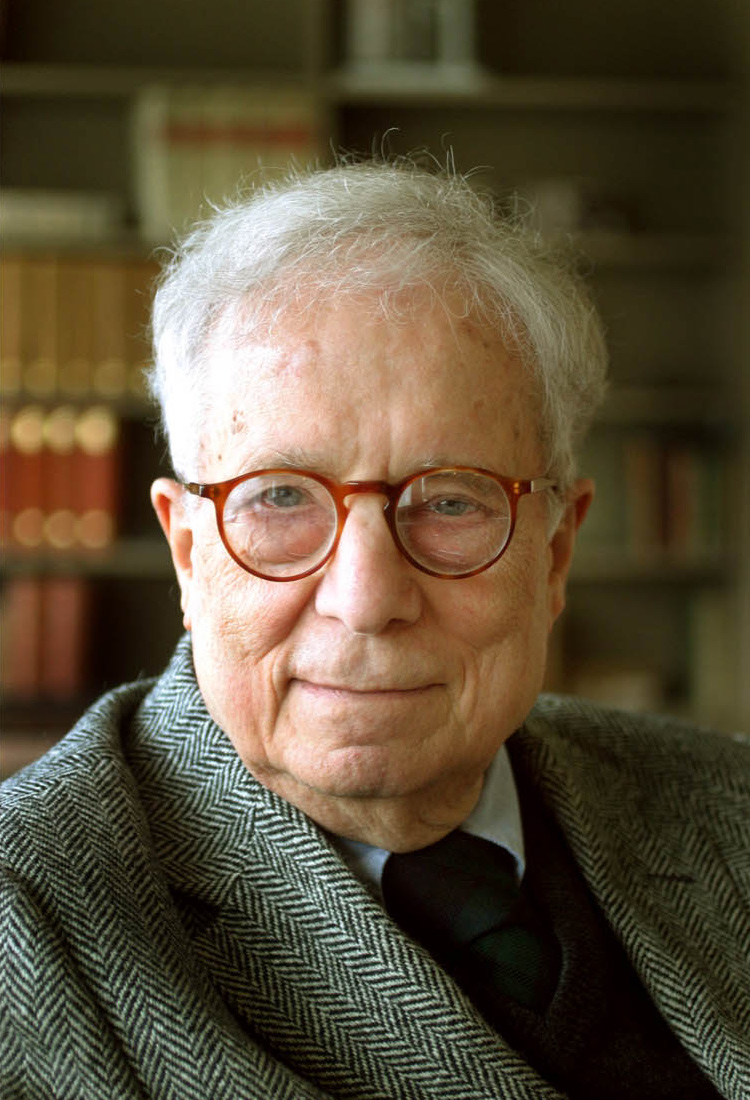
The of Robert Venturi himself, was taken from http://slowpainting.files.wordpress.com/2008/12/venturi.jpg.
The image of the Bank Building was taken from http://z.about.com/d/architecture/1/0/o/K/celebration9250014.jpg.
The image of the crazy building was found at http://www.thecityreview.com/arcnowx.jpg.
The image of the Art Museum Addition was found at http://www.greatbuildings.com/gbc/images/cid_1170710514_Allen_Art_Museum_add.jpg.



"Less is a bore" I can't agree with Venturi on this one. I'm one that is in full support of simplicity as being revolutionary. I perfer John Maeda to Venturi anyday. I guess for Vegas that more bright lights and wasteful electricity is a must to draw people into throwing away their money, but I must say it just isn't for me.
ReplyDeleteI really love how you started off your post with a video clip and images. It's was nice to see work before reading about the designer. You did a good job describing his life and achievements. I think "less is a bore" is kinda true depending on the context of your work. Las Vegas can't be simple. It's needs to be extravagant.
ReplyDelete